Modern Water Feature Designs: Sheet Falls, Rills and Reflection Pools That Actually Work
A modern water feature is a piece of architecture with a pump behind it. Here is how sheet falls, rills and reflection pools are actually detailed — and where most self-installed versions go wrong.

A modern water feature is a piece of architecture with a pump behind it. Nothing about it is spontaneous — the edge, the flow rate, the acoustic and the sight line are all deliberate. When any of those go wrong, the feature reads as a garden-centre fountain rather than a designed piece.
The three modern water features that work
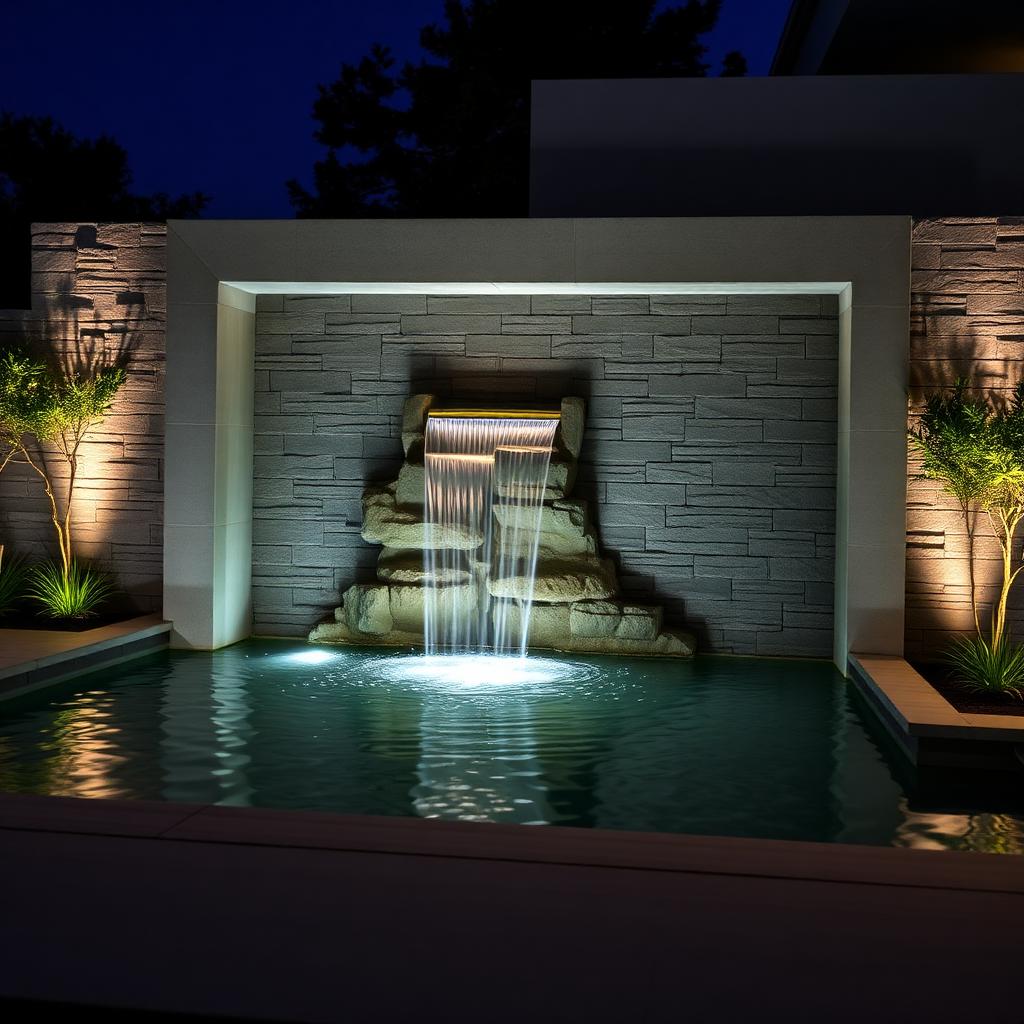
Sheet falls (also called sheer descent falls): a thin, continuous horizontal blade of water falling from a wall into a catch basin. Sound: soft; visual: strong.
Rills: narrow, shallow channels of moving water running across a paved surface, sometimes stepping down through a series of pools. Sound: gentle; visual: architectural.
Reflection pools: shallow still-water basins used purely for reflection, with almost no visible flow. Sound: none; visual: entirely about what is mirrored in the surface.
Sheet falls: the pump and edge details
The blade weir determines everything. A machined stainless steel weir gives a clean uninterrupted sheet across widths up to 1.5m. Homemade or moulded plastic weirs almost always produce a broken sheet with visible strings and rope-like flow.
Flow rate: roughly 30–45 litres per minute per 300mm of weir width for a full sheet. Under-pump and the water breaks up; over-pump and it splashes past the catch basin. A variable-speed pump lets you tune the flow on site.
Rills: shallow water as architecture
A rill needs to be shallow (50–120mm), wide enough to read as intentional (200–400mm), and finished on the inside with a dark, matt material — honed basalt, dark grey render, or slate. Pale interiors make the water look thin and dirty; dark interiors make it look deep and reflective.
The circulation loop is critical: a rill is only convincing if the water is moving. Plan the outlet at the high end and the pump inlet at the low end, with adequate flow to keep the surface alive but not turbulent.
Reflection pools: stillness as the design
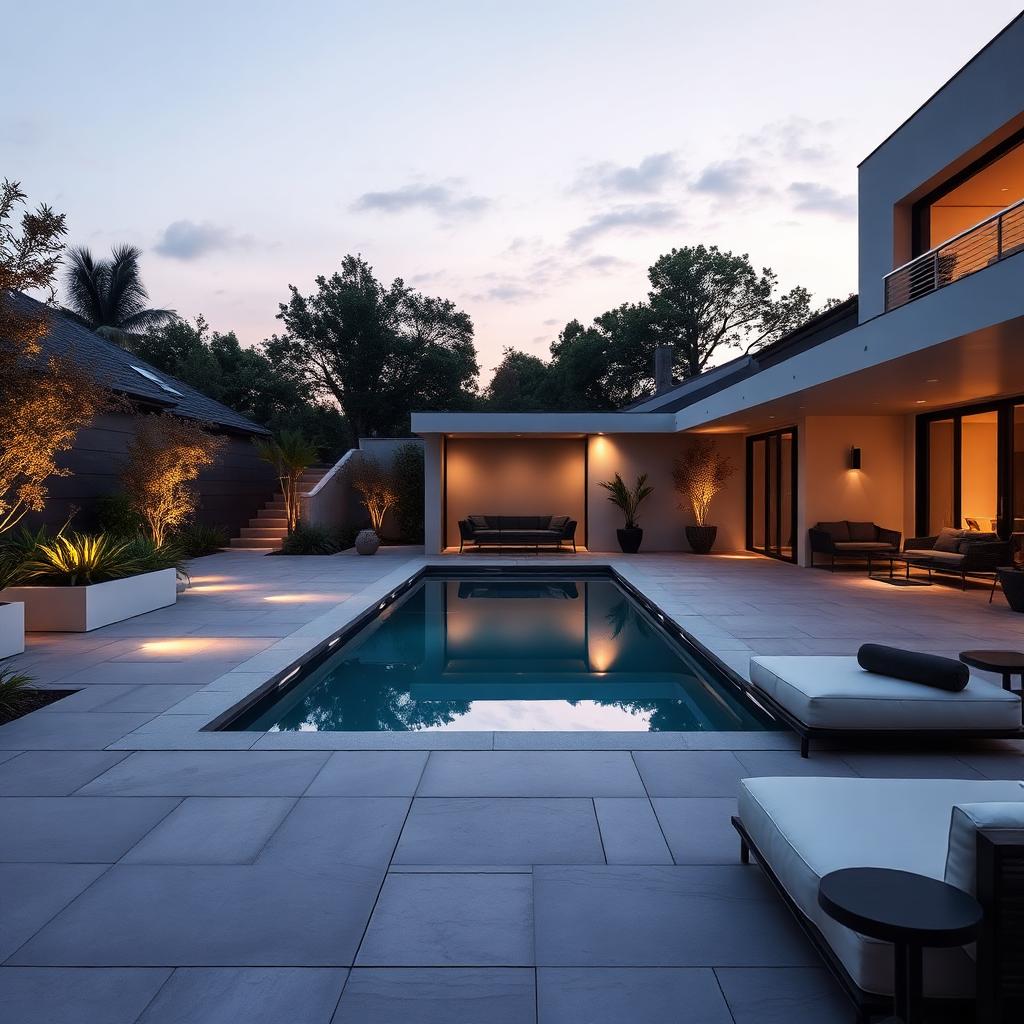
The point of a reflection pool is what is reflected in it — usually a building elevation, a specimen tree, or the sky. Site it directly beneath whatever you want to see doubled, and keep any moving-water component (a small trickle or overflow) discreet so the surface stays largely still.
Depth 200–300mm is enough. Dark interior finish, matt coping, and no fountain jets in the middle. Skimmers along the downwind edge keep the surface clear without breaking the illusion.
Sound, lighting and finishing
Sound: sheet falls project a soft continuous shush; rills produce a lighter trickle; reflection pools produce nothing. Match the water feature to the ambient noise you need — a busy urban site benefits from a sheet fall to mask traffic; a quiet rural site suits a silent reflection pool.
Lighting: warm-white submersible LED in the catch basin, aimed up through the sheet. For rills and reflection pools, aim from the sides — never directly upward through still water, which will just light your algae.
Key Takeaways
- Sheet falls need a machined stainless weir and a properly sized variable pump.
- Rills read best when shallow, narrow and dark-lined inside.
- Reflection pools depend entirely on what is placed above them — site them under the view.
- Match the water type to the ambient noise you are working with.
- Warm-white submersible LEDs; never top-light still water.
Frequently Asked Questions
How much maintenance does a modern water feature need?
A weekly check of pump filters, a monthly water top-up, a quarterly clean of the weir and reservoir, and an annual full drain-and-refill with fresh treatment. Reflection pools need the most surface skimming; sheet falls the most weir cleaning.
Do I need a reservoir tank?
For almost any wall-mounted sheet fall or rill, yes — a hidden below-ground reservoir keeps the water level constant, houses the pump and simplifies top-ups. Above-ground basins are visible and prone to algae.
Can water features run through winter?
In frost-free climates, yes. In cold climates, drain the visible components and either drain or add a small circulation heater to the reservoir. Leaving a full reservoir with a static pump through a hard freeze will crack fittings.