Modern Minimalist Backyard Design: A Designer's Blueprint for Calm, Uncluttered Outdoor Living
Minimalism outdoors is not the absence of things — it is the presence of the right ones. Here is the exact design language behind gallery-quality modern backyards, from paving ratios to plant edits.

A minimalist backyard is not an empty backyard. It is a garden where every material, every plant and every light source is doing a job — and where anything that isn't has been removed. Done well, it reads as calm; done badly, it reads as bare. The difference is discipline: strict ratios, a tight material palette, and a planting scheme edited down to a handful of species used generously.
What minimalism really means outdoors
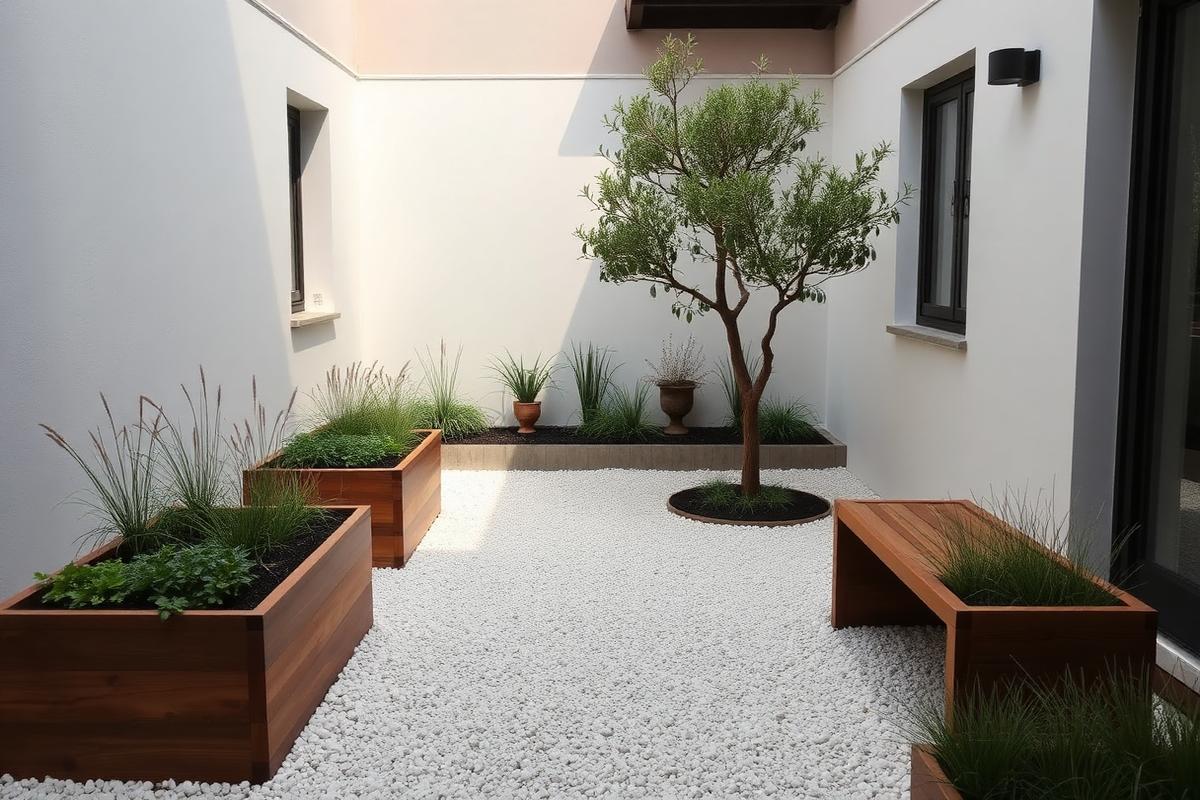
Minimalism is often mistaken for austerity. In practice, a minimalist backyard is warm, tactile and generous — it is just quiet. Nothing competes with anything else. One material carries the ground plane, one carries the walls, one carries the planters. One or two structural plants repeat across the space. One warm light temperature washes the whole scheme.
The mood you are aiming for is a hotel courtyard, not a shop window. Softness matters. A minimalist garden with no texture in the planting or no warmth in the lighting will always feel cold, no matter how expensive the paving.
The three-material rule
Pick exactly three hardscape materials and use them everywhere. On most modern backyards I design, that means: large-format sawn stone or porcelain for the ground, powder-coated aluminium or black steel for verticals (planters, screens, edging), and one warm timber — usually iroko, ipe or thermally-modified ash — for benches, decking pockets or cladding.
Anything else is subtracted. No mixed paving, no brick banding, no random pebble beds unless they replace one of the three. Three materials, used in generous unbroken planes, is what makes a modern garden feel considered rather than assembled.
Layout ratios that read as intentional
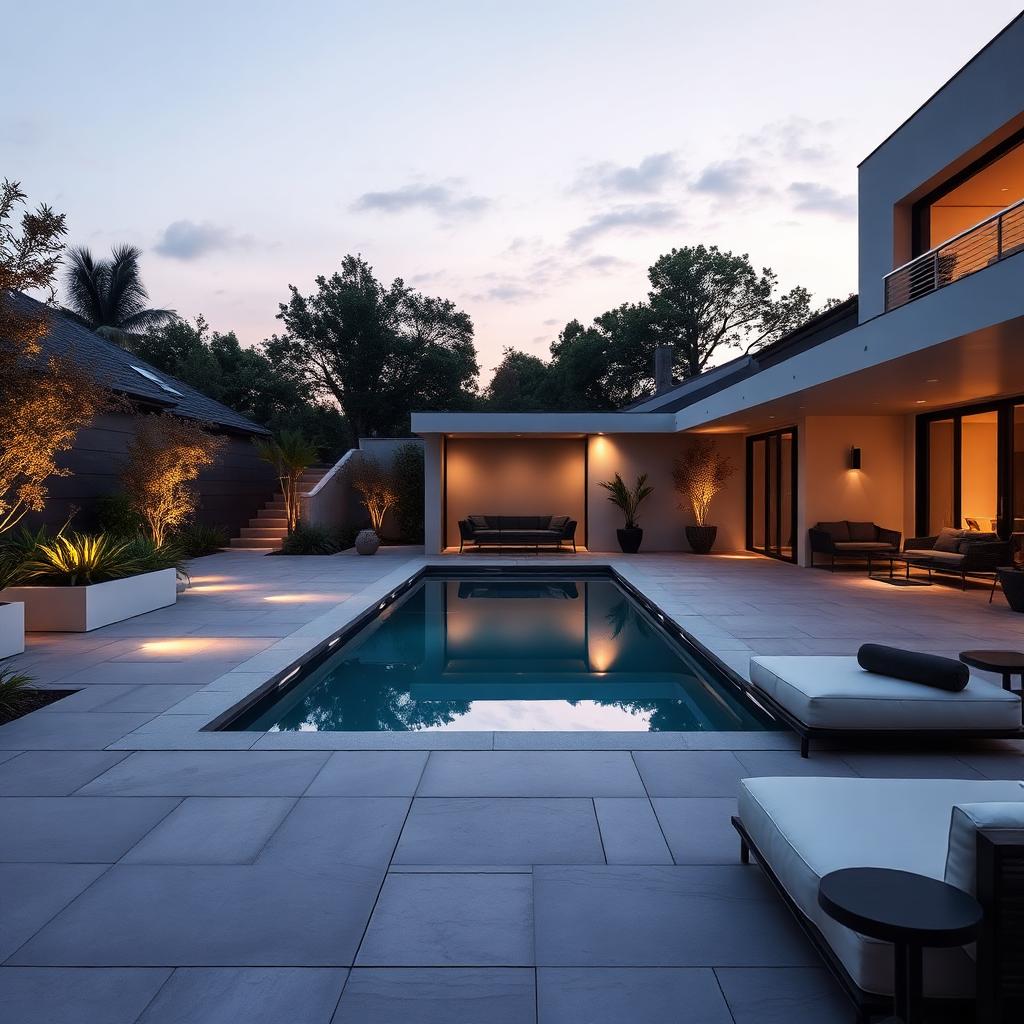
Modern backyards look best when the plan is broken into a small number of large rectangles rather than many small elements. I use a rough two-thirds rule: two-thirds of the plot is one uninterrupted paved plane; the remaining third is planted, sunk or pooled. A single strong diagonal or offset — a pool that runs the length of one boundary, a bench that steps out from a wall — is often all the geometry the space needs.
Symmetry is fine but not required. What is required is that the eye can trace the plan in three or four moves. If it takes ten, you have too much going on.
The planting edit
The classic minimalist palette is architectural: multi-stem Amelanchier or river birch for canopy; clipped Pittosporum, Osmanthus or Taxus for structure; a river of Hakonechloa, Deschampsia or Sesleria for movement; and one repeated evergreen groundcover like Ophiopogon. Five species, maximum. No annuals. No bedding.
Repetition is the key. Twenty of the same grass reading as one continuous mass will always outperform twenty different perennials in a modern scheme. When in doubt, remove a species — do not add one.
Lighting as architecture
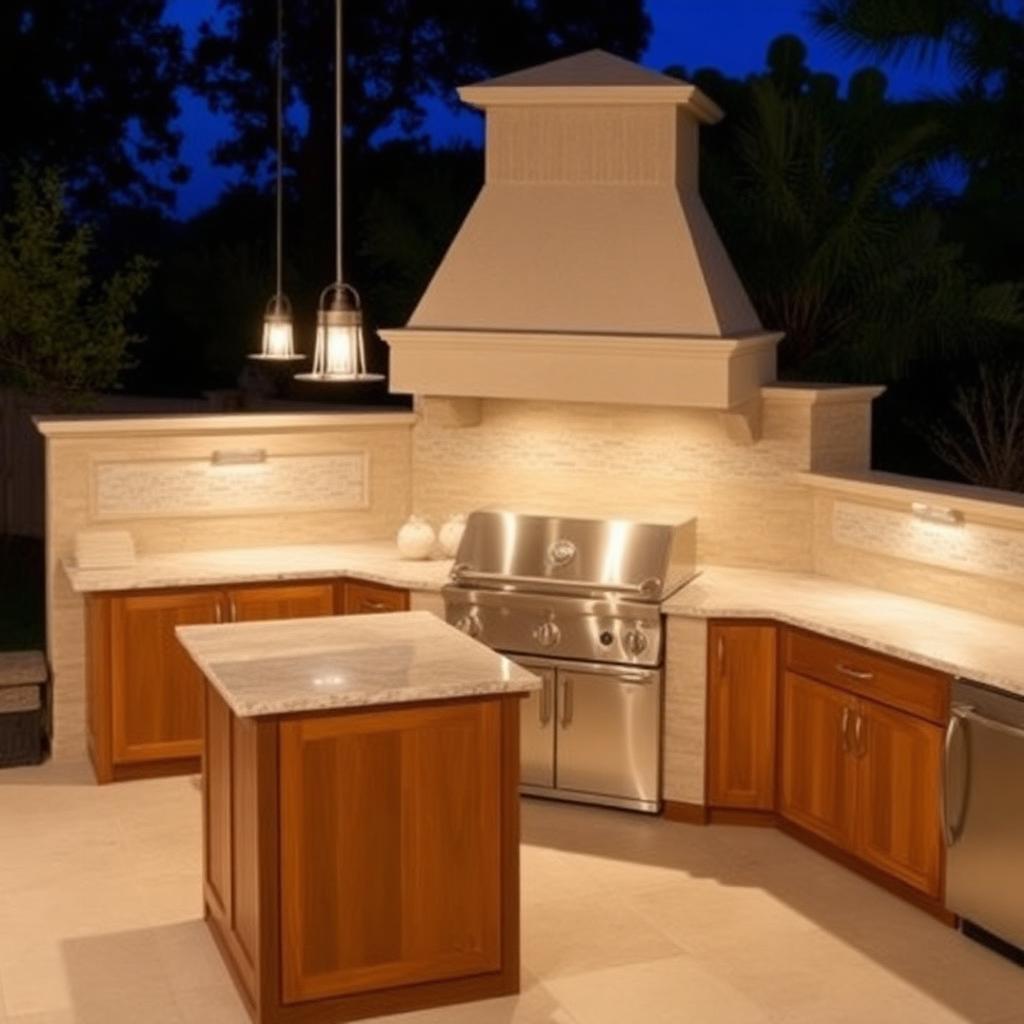
In a minimalist garden, lighting is not decoration — it is part of the built fabric. Recessed step lights, in-ground uplights on structural trees, and hidden linear LEDs under bench overhangs or planter lips. No visible fixtures. No festoons. No cool white.
Stay at 2700K, keep the beam angles narrow, and light three things maximum: one canopy, one wall wash, and one ground plane. That restraint is what turns a well-built modern garden into a photograph.
Key Takeaways
- Three materials, used generously — no mixed paving, no brick banding.
- Two-thirds paved, one-third planted or pooled reads as intentional.
- Five plant species maximum, repeated in large masses.
- Warm 2700K lighting only, fixtures hidden, three light sources per view.
Frequently Asked Questions
Is a minimalist backyard low-maintenance?
Lower than a mixed border, but not zero. Clipped evergreens need one shape-cut a year, grasses need a spring cut-back, and paving needs an annual wash. Budget one full day per season.
Does minimalism work in a small backyard?
It works particularly well — the discipline that makes minimalism convincing (one material, one repeated plant) is exactly what small gardens need to feel larger.
What is the biggest mistake in a minimalist garden?
Under-planting. Bare ground and empty planters read as unfinished, not minimal. Commit to the plant masses at full density from day one.