Luxury Outdoor Kitchen Design: How to Plan a Cook Space That Actually Gets Used
Most luxury outdoor kitchens are built for photographs, not dinners. Here are the working proportions, materials and zoning rules that make one you will actually cook in twice a week.

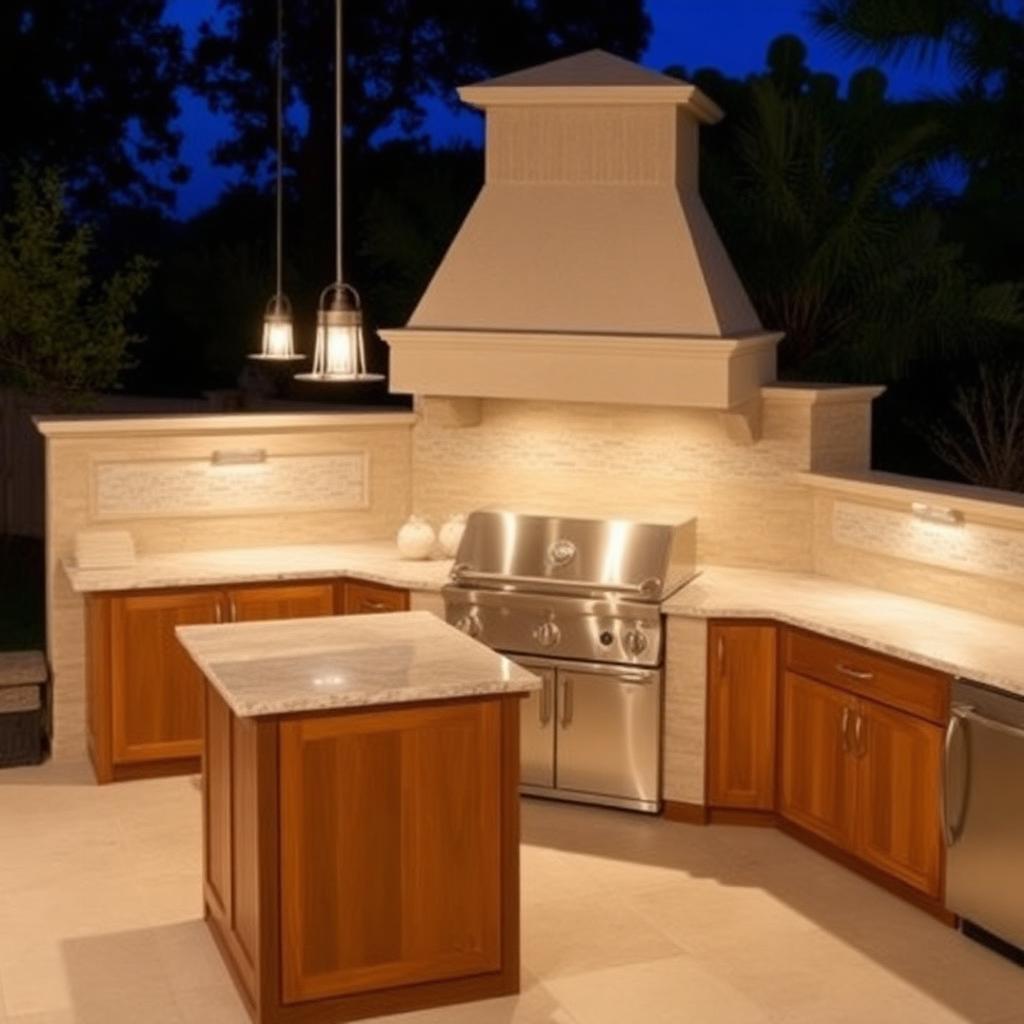
An outdoor kitchen only gets used if it works as a kitchen first and a showpiece second. The luxury versions that live on Instagram usually have a stunning grill, one narrow worktop and nowhere to put a chopping board. Below are the working rules — zoning, dimensions, materials and services — that separate a real cook space from a garden ornament.
The five zones every outdoor kitchen needs
Any functioning kitchen, indoor or outdoor, needs five zones in sequence: storage, prep, cook, plate, serve. Miss one and every meal turns into a shuttle back to the house.
Minimum widths I use: 600mm storage, 900mm prep, 900mm cook (grill or hob), 600mm plate, plus a bar or dining edge for the serve zone. That is 3 linear metres before you add a sink or a fridge — plan for it early, not late.
Worktop depths and heights that work
Standard indoor worktop depth (600mm) is too shallow outside. Bump prep and plate zones to 700mm so you can land a full sheet pan without it hanging over the edge. Keep the cook zone at 600mm — the grill hood needs the extra clearance behind.
Worktop height stays at 900mm for standing prep, but drop the dining edge to 750mm if guests will eat there. A single-height counter that tries to do both jobs does neither well.
Materials that survive the weather
Worktops: dense honed granite or porcelain slab. Skip marble (etches), quartz (yellows in UV) and concrete (cracks unless properly sealed annually).
Cabinetry: marine-grade stainless steel or powder-coated aluminium with HDPE inserts. Timber cabinets look beautiful in year one and swollen in year three unless they are properly ventilated and under a fully covered roof.
Grill housing: rendered blockwork, honed stone or corten steel. All three age gracefully; painted timber does not.
Ventilation, roofing and smoke
A fully enclosed outdoor kitchen needs a proper extraction hood rated for outdoor use — not a decorative one. A partially covered kitchen needs at least 900mm of unobstructed clearance above the grill hood and a prevailing-wind check so smoke does not blow back through the seating area.
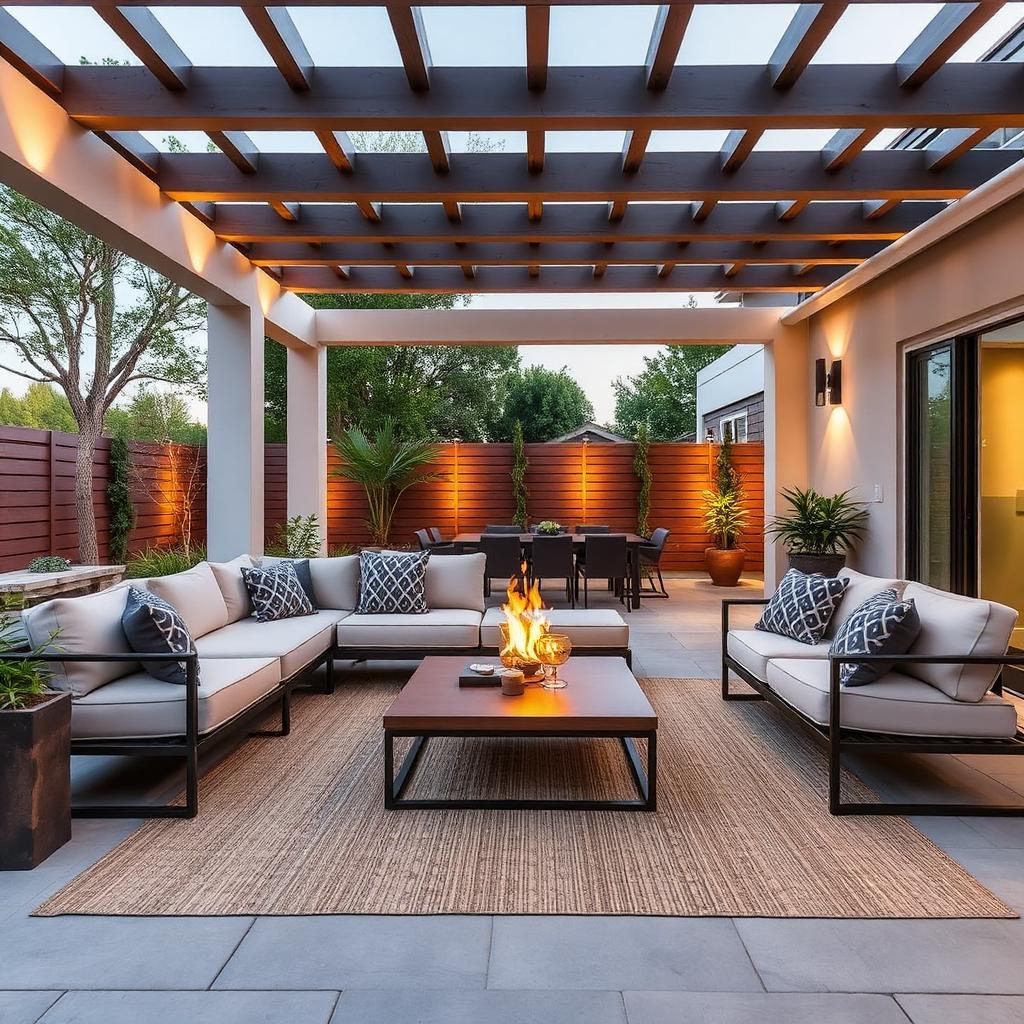
The single most common failure in luxury outdoor kitchens is a beautiful pergola that traps smoke over the dining table. Site the grill on the downwind side of the seating, always.
Key Takeaways
- Plan five zones in order: storage, prep, cook, plate, serve — never skip prep.
- Prep and plate worktops at 700mm deep; cook zone at 600mm.
- Honed granite or porcelain worktops, stainless or aluminium cabinets.
- Site the grill downwind of the dining zone; check smoke flow before pouring the slab.
- Run all services and sockets before the cabinetry is closed in.
Frequently Asked Questions
How much does a luxury outdoor kitchen cost?
In 2026, a properly built outdoor kitchen with premium appliances, stone worktops and a dedicated pergola typically runs £25,000–£60,000 in the UK and $35,000–$90,000 in the US, excluding groundworks.
Do I need planning permission for an outdoor kitchen?
For most freestanding structures under 2.5m high and away from boundaries, no. A fully roofed structure over 15m² or attached to the house may need permission — check local rules before building.
Can I use an outdoor kitchen year-round?
With a covered roof, an infrared patio heater and a windbreak, yes — most well-designed outdoor kitchens are usable eight to nine months a year in temperate climates.