Modern Sculptural Planter Ideas: The Single Design Move That Elevates a Whole Garden
A sculptural planter is architecture with a plant in it. Here is how to size, place and plant one so it does the work of a much larger design intervention.

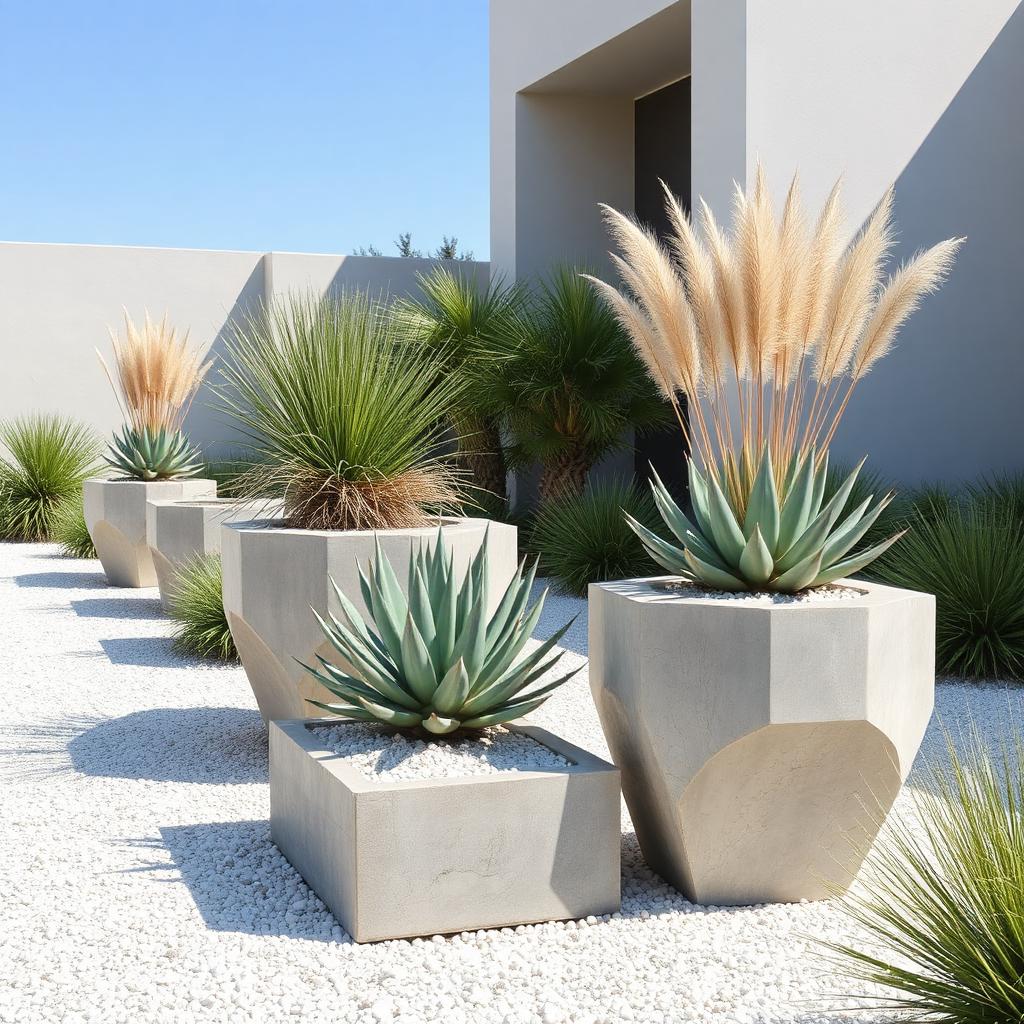
A sculptural planter is architecture with a plant in it. It defines a corner, marks a threshold, terminates a view, or grounds a piece of furniture — all in a single object. The difference between a garden centre pot and a design intervention is size, material and placement.
Planter as architecture, not decoration
A planter placed to fill a gap reads as an afterthought. A planter placed to define a corner, mark a doorway, or terminate a view reads as a design decision. Before choosing the planter, decide what it is doing in the plan.
One large planter almost always beats three small ones. Presence outperforms quantity outdoors.
Sizing and scale
Minimum sculptural planter for a courtyard or terrace: 600mm cube. Below that it reads as a pot, not architecture. For an entrance or a strong focal role: 900–1200mm in the primary dimension. For a rooftop or large paved plate: 1.5m plus.
Rule of thumb: the planter should be at least the visual weight of a piece of furniture — a chair, a small table — not a lampshade.
Materials that read as modern
Cast concrete: the default modern planter material. Off-white, warm grey, or charcoal, in geometric or sculpted forms. Look for fibre-reinforced or GRC panels for larger sizes.
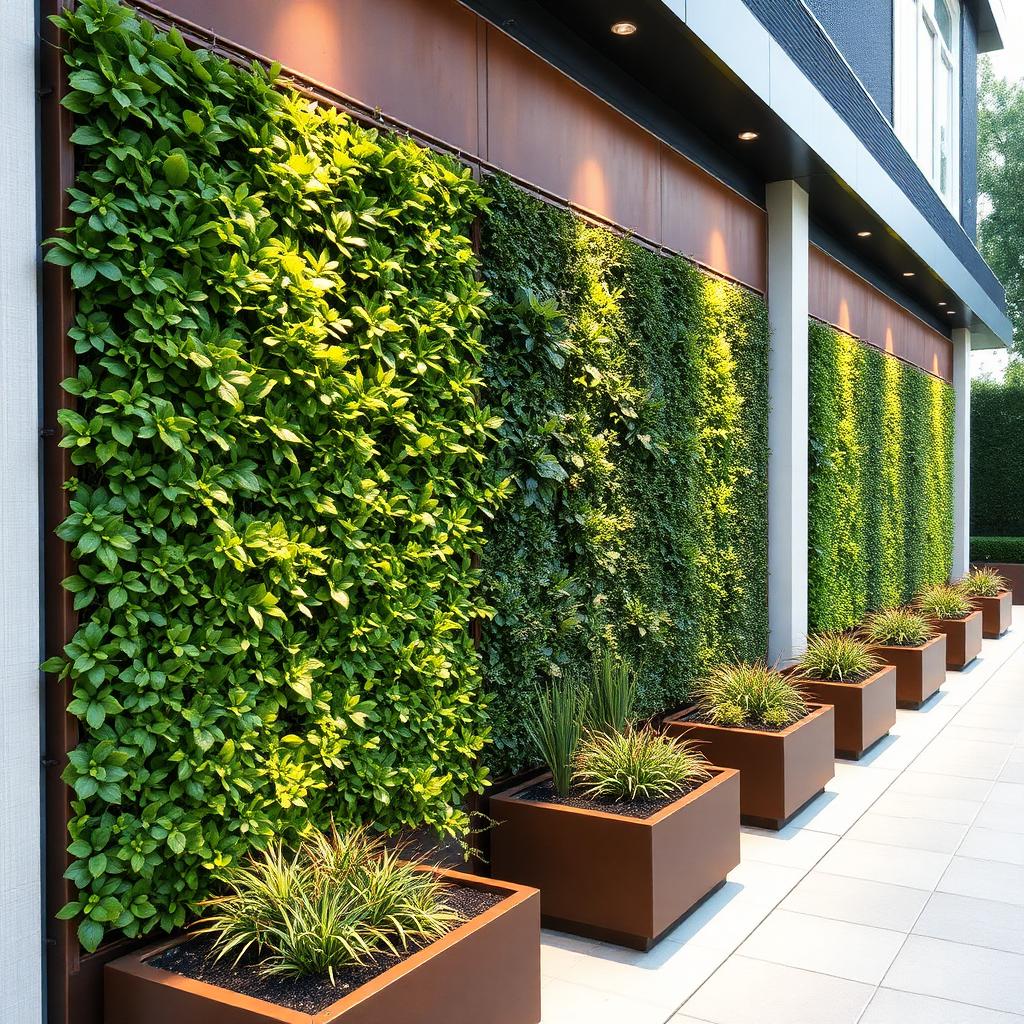
Corten steel: strong warm colour, best in a gravel bed to catch the runoff. Fibre-reinforced polymer: lightweight, weatherproof, comes in more shapes; look for high-quality matt finishes and avoid anything with a visible plastic sheen.
Terracotta and glazed ceramic can work if the form is genuinely modern — a plain cylinder or angular vessel — but most reads as traditional.
What to plant in a sculptural planter
One species, mass planted. A single Agave, a clump of Sesleria, a specimen olive, or a mass of Ophiopogon. Anything mixed inside a sculptural planter dilutes the sculpture.
Match plant scale to planter: a 600mm planter suits mid-height grasses or a small clipped shrub; a 900mm planter suits a small tree or an oversized architectural specimen; a 1.5m planter can carry a multi-stem tree.
Placement rules
One planter placed alone reads as sculpture. Two planters placed symmetrically read as a threshold. Three or more read as a rhythm — always identical, always evenly spaced.
Never mix scales: a small planter beside a large planter reads as accidental. Never place a planter to fill an awkward gap — solve the gap in the paving or the planting instead.
Key Takeaways
- Decide the planter's role in the plan before choosing the object.
- 600mm minimum for sculpture; 900–1200mm for focal work; 1.5m+ for rooftops.
- Cast concrete, corten, or matt-finish polymer — avoid glossy plastic and small terracotta.
- One species per planter, mass planted, matched in scale to the vessel.
- One = sculpture. Two = threshold. Three+ = identical rhythm.
Frequently Asked Questions
How do I stop a large planter from drying out?
Line the sides with a moisture-retentive geotextile, use a peat-free compost with added water retention granules, mulch the surface 30mm deep with grit or bark, and install a simple drip line on a timer.
Do sculptural planters need drainage?
Yes — always. A planter without drainage will drown its plant within one wet season. Drill drainage holes into the base or, on rooftops, into hidden side vents that drain into the pedestal system.
How heavy is a large concrete planter?
A solid 900mm cube in cast concrete easily weighs 250–350kg empty. Filled with soil and a plant it exceeds 500kg. Plan the delivery, the base, and — on rooftops — the structural load before ordering.