Modern Front Yard Luxury Ideas: Kerb Appeal Without the Suburban Clichés
Kerb appeal is not lawn plus bedding. A modern front yard earns its luxury from restraint — one bold planting move, one clean material palette, one perfect light layer.

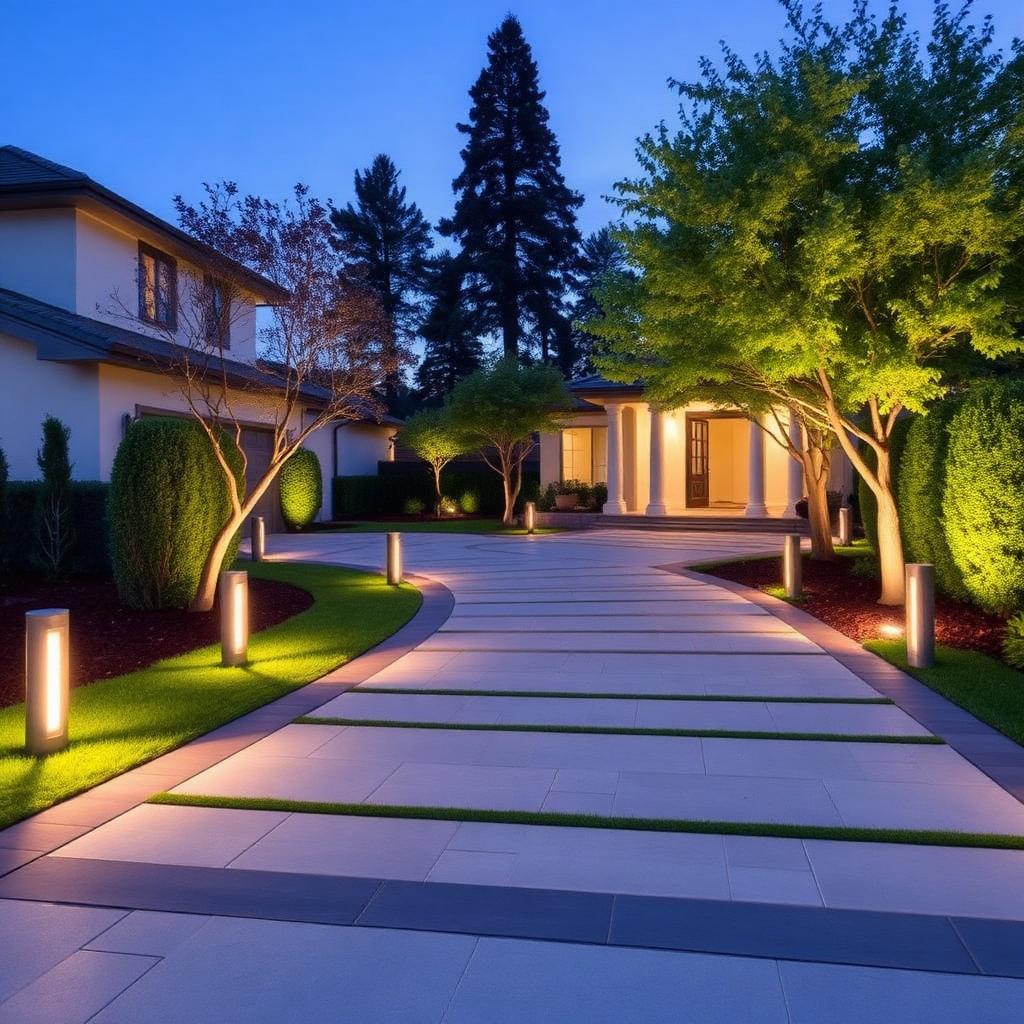
The most common front-yard failure is not doing too little — it is doing too much. A lawn strip, a hedge, a border of bedding, a stone kerb, a garden centre pot, a solar bollard, a random tree. The eye finds nothing to land on. A modern luxury front yard almost always removes three or four elements from a typical planting scheme and commits to what remains.
Start by editing, not adding
Walk to the pavement and look at the house. Ask which elements are helping and which are just there. The stripe of bedding rarely helps; the mid-century concrete planter often does. Remove what is competing before adding anything new.
The most powerful modern front yards use two colours (green and one accent), one hard material, and one clear vertical accent. That is often it.
One bold planting move
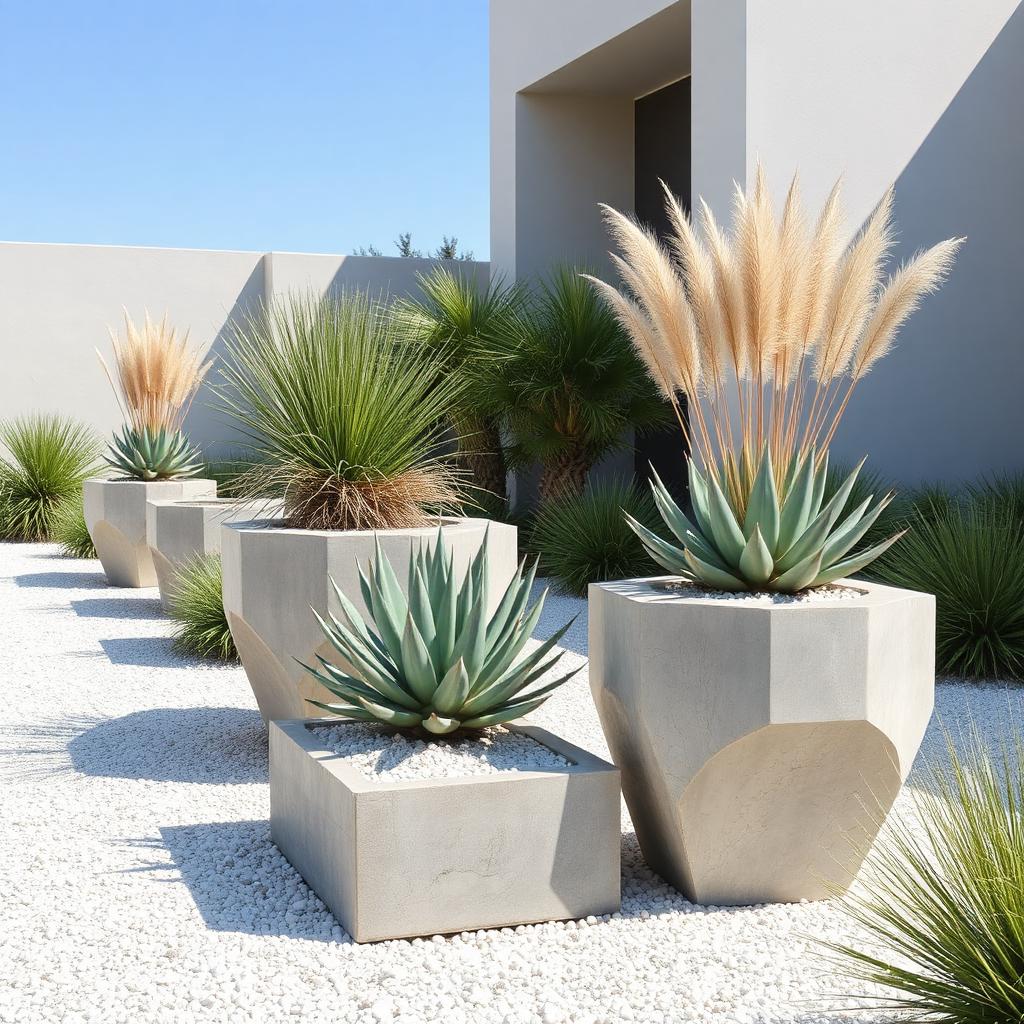
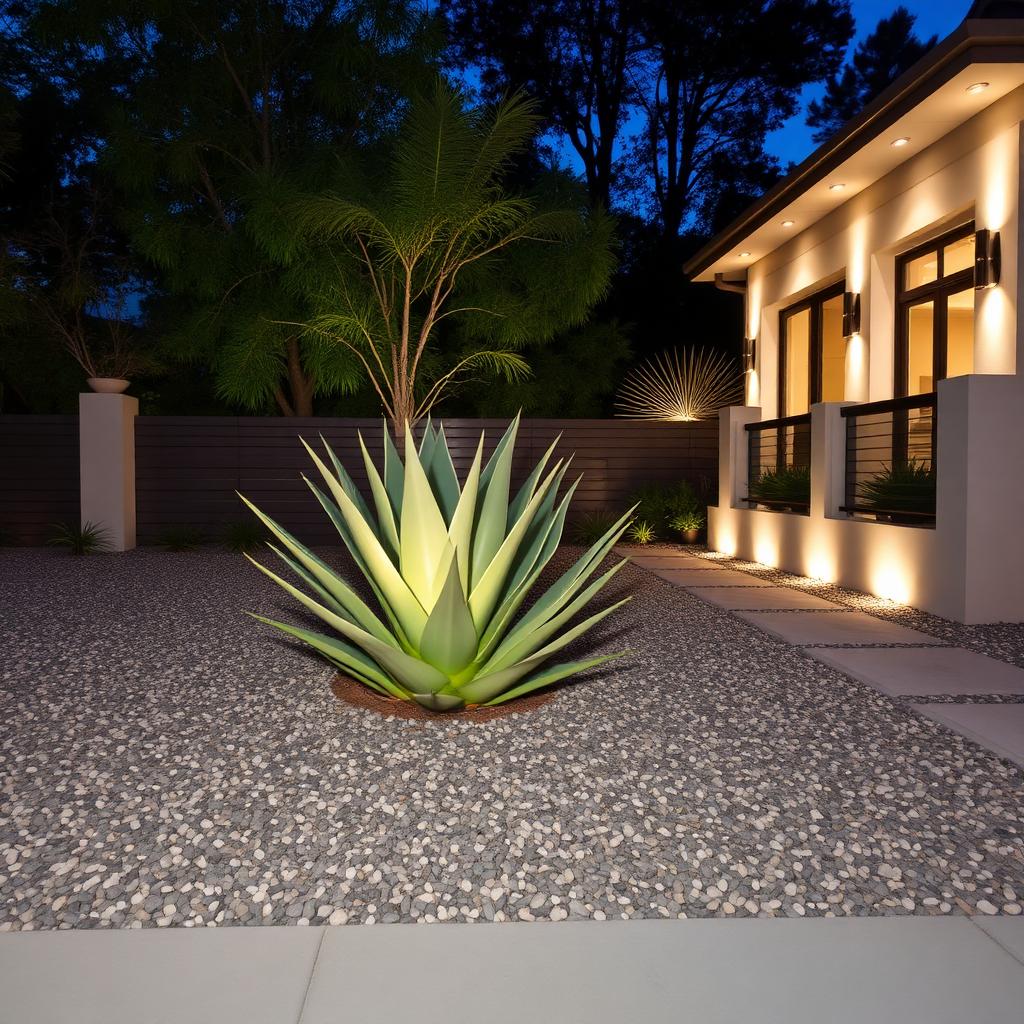
Instead of a mixed border, pick one architectural species and repeat it. A run of mature Buxus or Osmanthus balls; a single row of Cordyline or Phormium; a repeated Agave in a gravel bed; a small grove of multi-stem Amelanchier.
Repetition of a single strong plant reads as a designer's choice. A mixed shrubbery reads as inherited.
Gates, fences and screens
Vertical timber slat screens (100mm boards with 15mm gaps) at 1.5–1.8m read as modern and provide filtered privacy. Powder-coated aluminium or steel gates with a matching slat pattern work with almost any facade.
Skip picket fences, brick pillars with lantern caps, and any wrought-iron gate with scrolled tops. All three date instantly.
Lighting the facade
One warm wall-wash on the primary facade material, two low uplights on chosen structural plants, and one warm light behind the house number. That is the whole scheme.
Skip pathway spike lights, coloured lights, and anything that flashes or changes. Modern facade lighting is quiet on purpose.
Designing for low maintenance
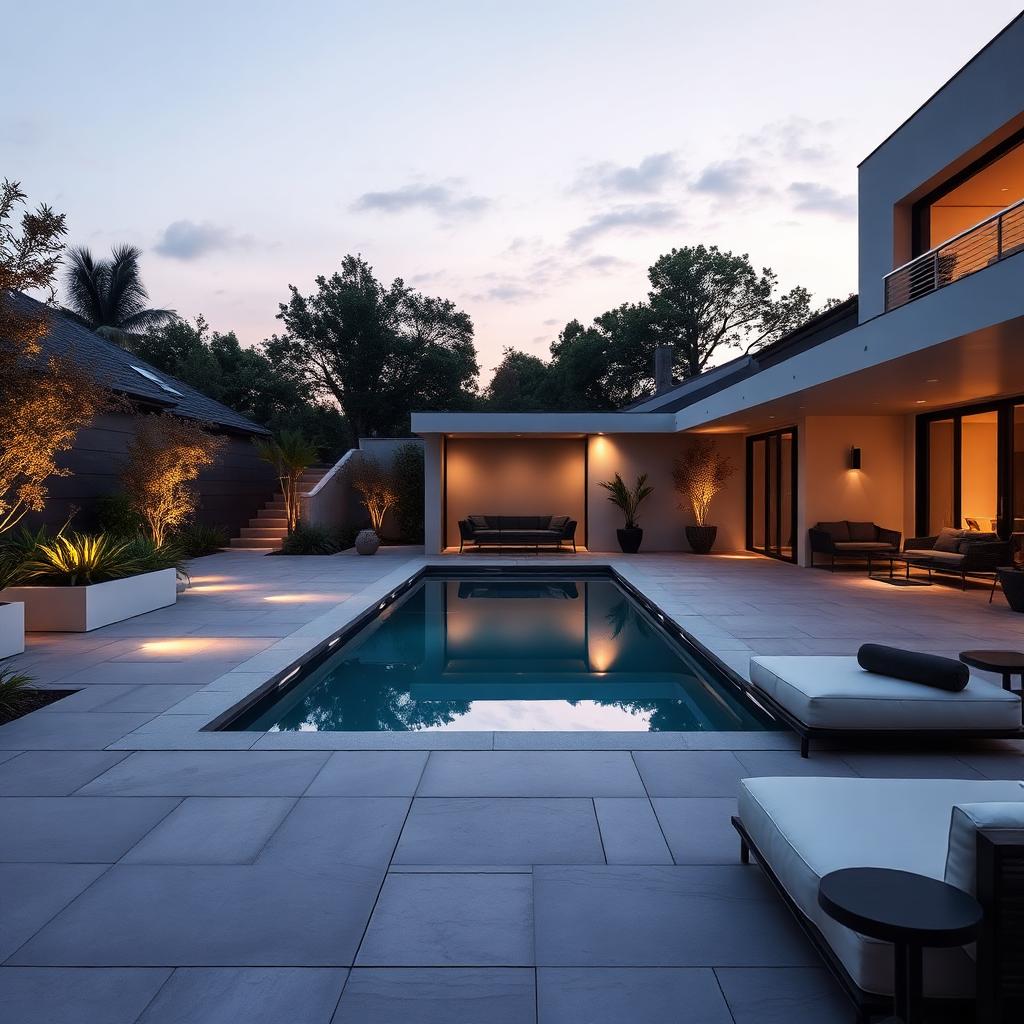
Front yards get the least care because they get the least visible use. Design for that: gravel or planted joints instead of lawn; a small number of tough species; automatic drip irrigation on any planter or living element; and hard edges that do not need re-cutting.
A luxury front yard should be perfect at 6pm on a Tuesday when nobody has looked at it since Sunday. That means minimal weeding, minimal edging and no annual re-planting.
Key Takeaways
- Edit before adding — remove competing elements first.
- One repeated structural plant beats any mixed border.
- Slatted timber or metal for gates and screens; skip picket and wrought iron.
- One wall wash, two plant uplights, one house-number light — that is the scheme.
- Design for perfection on days you don't visit — gravel, drip irrigation, tough species.
Frequently Asked Questions
Does a modern front yard need a lawn?
Almost never. A small front lawn is high-maintenance and low-impact. Gravel with planted islands, low ground cover, or a paved court with structural planting all deliver more kerb appeal for less work.
How tall should a front-yard hedge or screen be?
1.2m for defining without blocking; 1.8m for genuine privacy from a street. Higher can trigger permitted development limits — check locally.
What is the best facade lighting colour temperature?
2700K for warm brick, timber or render; up to 3000K for cool stone or pale render. Never above 3500K on residential architecture.