The Cottage Garden Design Guide: How to Plan Romantic, Low-Maintenance Borders
Cottage gardens look effortless and are anything but. Here's the structure designers hide inside the romance — and the plant pairings that hold up year after year.

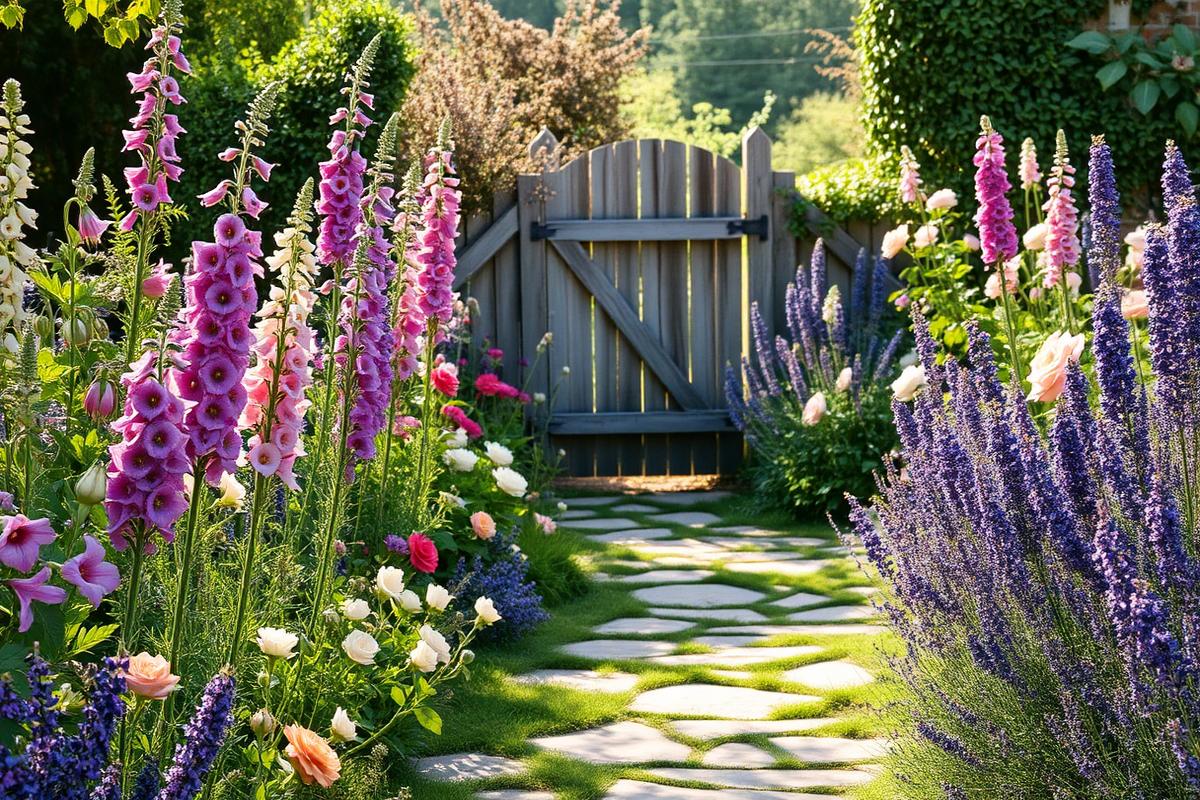
The romantic English cottage garden is one of the most-imitated and most-misunderstood styles in garden design. Done well, it looks like the plants chose where to grow. Done badly, it looks like nobody is in charge. The difference is structure — the part of cottage design that disappears under the planting but holds everything together.
What actually makes a garden 'cottage'
Three qualities define a cottage garden: dense, layered planting; a soft, hand-drawn geometry; and a plant palette weighted toward old-fashioned, often fragrant species. The original cottage gardens were working spaces — vegetables, herbs and flowers crammed into a tenant's plot. The romantic version we copy today was largely formalised by Gertrude Jekyll and William Robinson in the late 19th century.
The structure hiding inside the romance
Every successful cottage garden has a strong skeleton: a clear path, a repeated edging plant, and a few evergreen shrubs that hold the border together in winter. Strip the flowers away and the layout should still read as a designed space.
I use box, yew or sarcococca for the evergreen bones; a low edge of catmint, lady's mantle or geranium 'Rozanne' to soften the path; and a flagstone or brick path with grass joints to anchor the geometry.
A reliable cottage plant palette
A cottage border works on layers. Spires (foxgloves, delphiniums, verbascum), discs (achillea, scabious, knautia), and froth (alchemilla, nepeta, hardy geranium). Add a handful of roses, a clematis or two, and you have a border that performs from May to October.
Five plant pairings that always work
1. Rose 'Munstead Wood' with Nepeta 'Walker's Low' — deep crimson against soft mauve foam.
2. Foxglove 'Sutton's Apricot' with Alchemilla mollis — vertical apricot spires over lime-green froth.
3. Delphinium 'Black Knight' with white Astrantia — drama softened by cloud-like umbels.
4. Geranium 'Rozanne' under shrub roses — covers bare rose stems and flowers for five months.
5. Verbena bonariensis through Stipa tenuissima — see-through purple over moving grass.
Keeping it informal, not chaotic
The trick is editing. Twice a year — late spring and early autumn — walk the border and remove anything self-seeded into the wrong place. Stake tall perennials early, before they flop. And resist the urge to add 'one more thing': the most beautiful cottage borders use about 15–20 species, not 60.
Key Takeaways
- A cottage garden needs structural bones: evergreens, a path, and a repeated edging plant.
- Plant in three shapes — spires, discs and froth — for a balanced, layered border.
- Use 15–20 species repeated in groups, not 60 single specimens.
- Stake early and edit twice a year to keep informality from tipping into chaos.
Frequently Asked Questions
Is a cottage garden low-maintenance?
Lower than a formal garden once established, but not no-maintenance. Expect two intensive editing sessions a year — spring staking and autumn cut-back — plus light deadheading through summer.
What is the best soil for a cottage garden?
Most classic cottage plants prefer free-draining, moderately fertile soil. If your soil is heavy clay, add coarse grit and well-rotted compost before planting; if it is sandy, add compost annually.
Can I have a cottage garden in a small space?
Yes — the principles scale down. Pick a smaller palette (8–10 species), one structural shrub, and one repeated edging plant. A 3×3m bed can hold a complete cottage composition.