Luxury Poolside Cabana Design: The Small Building That Makes Any Pool Feel Like a Resort
A cabana is the smallest building that can change the character of a whole garden. Here is how to size, site and detail one so it reads as intentional architecture, not a garden shed with drapes.

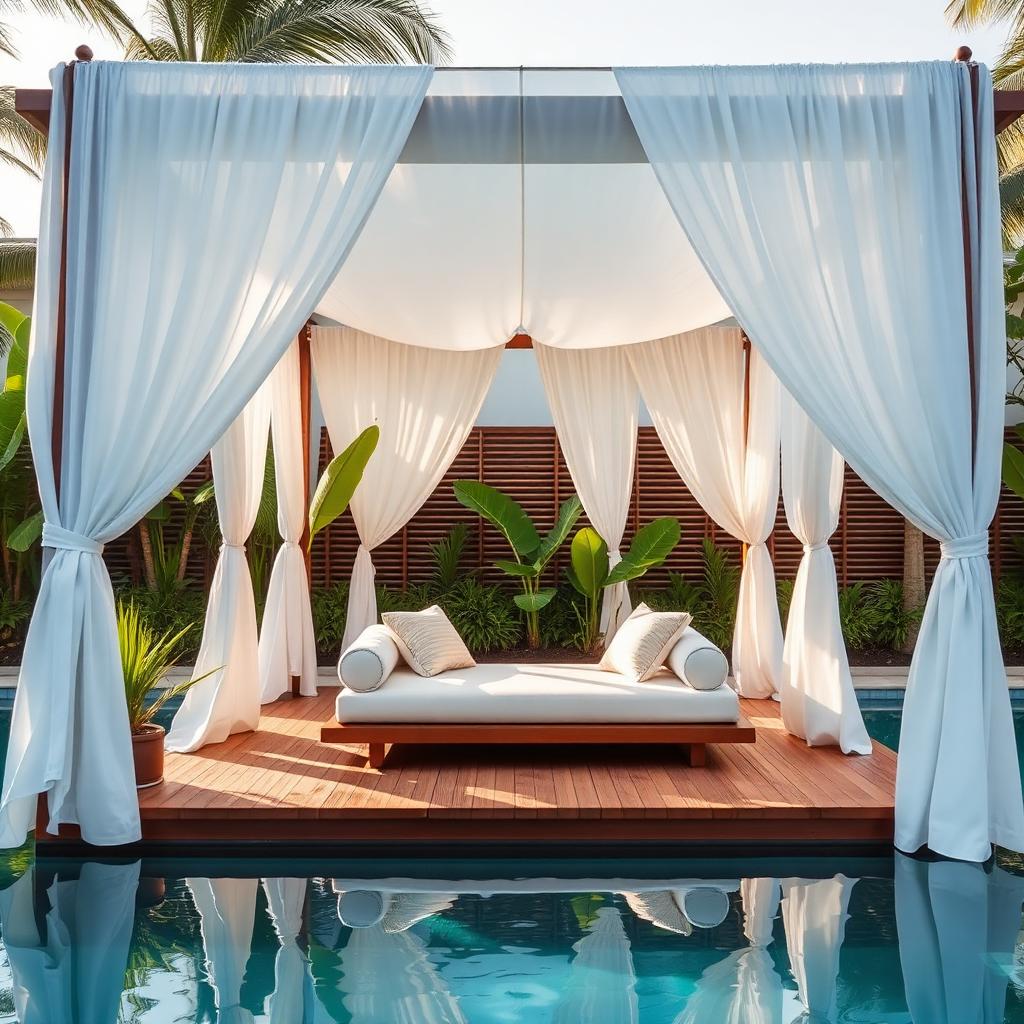
A well-designed cabana is the smallest single intervention that can change the character of a whole backyard. It creates shade, defines an outdoor room, and gives the pool a destination — the eye now travels from house to water to cabana in a satisfying loop rather than stopping at a boundary fence.
What a cabana actually does for a garden
Three things: it shades the daybed, it visually terminates the far end of the pool, and it gives you somewhere to disappear when the sun is too strong. The third is the one most homeowners underestimate — in a proper luxury cabana, the daybed is used far more often than the sun loungers.
Sizing: small enough to feel intimate, big enough to use
A single-daybed cabana works at 2.4m × 2.4m internally. A cabana with a daybed and two chairs needs 3.0m × 3.6m. A cabana with a bar or kitchenette needs 3.6m × 4.5m minimum. Bigger than that and it stops being a cabana and becomes a pool house.
Ceiling height: 2.7m internally. Anything lower feels cramped for a standing adult; anything much higher loses the intimacy that makes the space work.
Where to put it
Site it on the far side of the pool from the house, facing the house. That way the pool becomes the foreground of every view from the house, and the cabana becomes a destination — you have to walk somewhere to reach it.
Orient the open face of the cabana away from the prevailing wind and, in the northern hemisphere, roughly north or east so it stays shaded during the hottest part of the day.
Materials, roof and drainage
Structure: powder-coated aluminium or FSC timber posts on hidden concrete pads. Cladding: horizontal timber slats or rendered blockwork. Skip trellis and lattice — they date immediately.
Roof: solid, waterproofed and drained via hidden internal gutters to a below-ground soakaway. Open-slat pergola roofs are a common mistake on cabanas — they let sun in exactly when you need shade, and they let rain onto the daybed exactly when you don't.
Furniture, drapes and the finishing kit
Furniture: one large daybed as the anchor (Manutti, Tribu, Gloster or an equivalent). Optional pair of low chairs. One low side table. Nothing else — density kills the effect.
Drapes: outdoor-rated white or oatmeal linen-look fabric on stainless steel wire tracks. Drapes should reach the floor and be full-height, not decorative valances. Add a warm 2700K sconce on each of the two closed walls and a single dimmable pendant over the daybed.
Key Takeaways
- A cabana works because it gives the pool a destination the eye can travel to.
- 2.4×2.4m for a daybed cabana; 3.0×3.6m if you want chairs; 3.6×4.5m for a bar.
- Solid roof with hidden drainage — never an open pergola roof.
- One anchor piece of furniture; drapes to the floor; two warm wall sconces.
Frequently Asked Questions
Do I need planning permission for a poolside cabana?
In most jurisdictions a freestanding structure under 2.5m to the eaves and under 15m² footprint is permitted development, but check local rules on pool safety and outbuilding heights first.
What is the difference between a cabana and a pool house?
Scale and services. A cabana is essentially an open shaded room. A pool house includes a bathroom, changing area or kitchenette and is a small building with plumbing.
How much does a luxury cabana cost?
In 2026, expect £15,000–£45,000 in the UK and $20,000–$60,000 in the US for a purpose-built cabana with proper roof, drainage, cladding and furniture.