Luxury Hot Tub Patio Ideas: Siting, Screening and Detailing a Spa That Looks Designed
Most hot tubs look like plastic tubs on a slab because that is exactly what they are. Here are the siting, sinking and screening moves that turn one into a designed spa.

Most residential hot tubs look like a plastic tub sitting on a concrete slab because that is exactly what they are. Turning one into a designed spa is 20% the tub itself and 80% what you do around it — the siting, the level it sits at, the screening, and the material palette of the surround.
Siting: privacy, weight, and approach
Privacy first: a hot tub used every evening is a hot tub within eyesight of a private garden edge, not one on public display from the street or neighbour's window. Site with the primary user seat facing away from any overlooking window.
Weight: a full 6-person tub with water and occupants easily exceeds 3 tonnes. It needs a purpose-designed reinforced slab or a properly engineered deck substructure, not a decorative paving base.
Sinking versus deck-mounting
Fully sunken (rim flush with the deck): the highest-end look and the safest to step into. Requires a lined pit around the tub with drainage, a lift-off panel for service access on at least one side, and adequate ventilation to prevent moisture damage. Cost premium: significant.
Deck-mounted with wrap-around bench (rim above deck, steps and bench framed around the shell): 80% of the visual effect at a fraction of the cost. Wrapping the tub in matching timber or stone up to the rim hides the plastic shell entirely.
Screening and enclosure
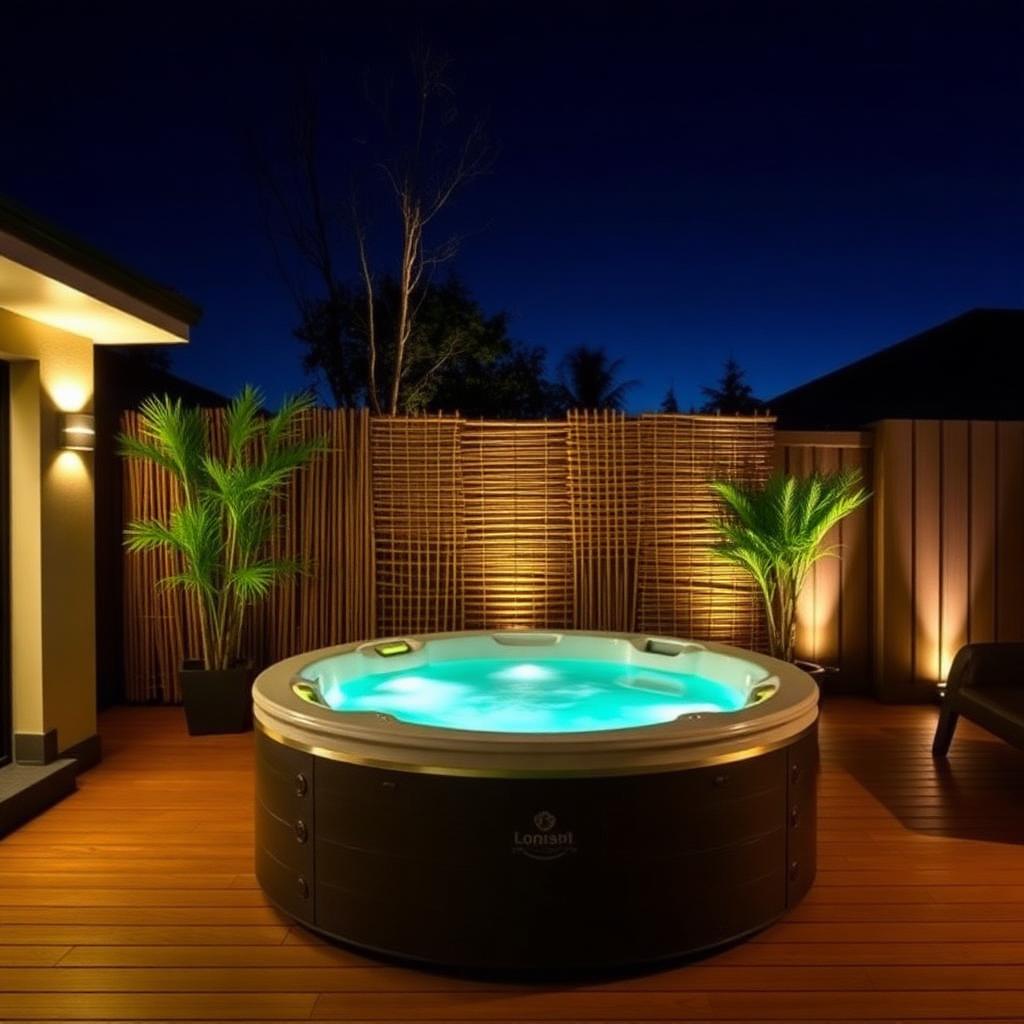
The single biggest visual upgrade to any hot tub is a screen on the exposed side. Options: a slatted timber panel, a laser-cut aluminium screen, a run of tall grasses, or a clipped evergreen hedge like Pittosporum or Escallonia.
Height 1.8–2.1m for standing privacy; 1.2m for seated privacy. Combine with an overhead pergola or sail for a real sense of enclosure — a hot tub with a ceiling above it feels twice as luxurious as one under open sky.
Deck materials around a tub
Thermally-modified timber, ipe, or iroko decking is the most forgiving finish around a spa — dries fast, slip-resistant when clean, warm underfoot. Textured porcelain works well for a more contemporary look and is more resistant to chemical splash.
Avoid smooth natural stone, standard limestone (etches), and any decking board wider than 145mm (cups and warps around a wet zone).
Lighting, power and services
Power: dedicated circuit, RCD-protected, run in armoured cable to a lockable isolator within sight of the tub. Never use extension leads.
Lighting: two warm 2700K uplights on adjacent structural planting, a soft ground wash under the surrounding bench, and no direct downlight above the tub — bathers should never be lit from directly overhead. Add a discreet 3000K task light near the steps for safe entry and exit.
Key Takeaways
- Site for privacy first; user faces away from overlooked windows.
- Design the slab or deck for full water + user load — 3 tonnes minimum for a 6-seater.
- Sink the tub for a flush rim, or wrap the shell with timber/stone up to the rim for a similar look at lower cost.
- 1.8–2.1m screening on the exposed side; overhead structure for enclosure.
- Warm side lighting only — never direct downlight above the water.
Frequently Asked Questions
Do I need planning permission for a hot tub?
Almost never for the tub itself, but a fully enclosed spa building or a very large screen may need consent. Building regulations apply to the slab and any electrical work.
How much space do I need around a hot tub?
At least 600mm on the service access side, 900mm on the entry side, and 400mm on the remaining sides. More is better — a spa jammed against a wall is unpleasant to use.
Can I use a hot tub in winter?
Yes — hot tubs are designed to run year-round. A properly insulated cover and a covered pergola above cut running costs significantly.